It’s that time of year when many Founders and CEOs of Home Care companies begin to think about gathering their leadership team for a planning retreat to get ready for 2027. Most of the companies I have worked with over the past dozen years at the Home Care CEO Forum have hosted some type of off-site event for their top leadership team each year or so.
Sometimes these retreats are set up for strategic planning. Sometimes that are organized to deal with big burning operational issues. Sometimes they focus on creating competitive advantage in the marketplace. Other times, they providing learning opportunities to help develop leadership knowledge, skills, and competencies.
One of the big factors that often sets top tier Home Care companies apart from those in the middle or bottom of the bell curve is how they develop and grow their leadership team. For top tier companies, leadership engagement and development are key parts of their growth strategy.
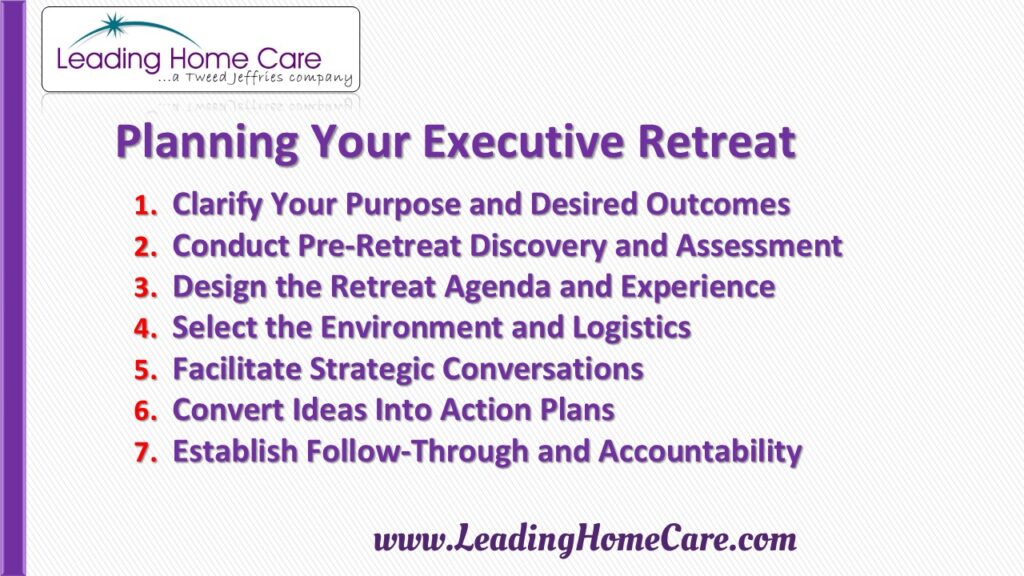
Seven Steps to Planning Your Next Executive Retreat
If you are thinking about setting up an event to take your top leadership team off site for a day or two, here are seven steps to take into consideration:
- Clarify your Purpose and Desired Outcomes – Why are you doing this retreat, and what do you want to come away with at the end?
- Conduct Pre-Retreat Discovery and Assessment – What do you need to know about where you are now, so you can plan for where you want to be. Gathering facts, data, and information to assess where you are now will help you develop action plans to get ready for the future?
- Design the Retreat Agenda and Experience – What are the specific things you want to accomplish during the retreat? What is the time line? What experiences do you want your leaders to have that will make this retreat memorable?
- Select the Environment and Logistics – Where will you hold your retreat? How will the environment contribute to the conversation and the experience for your leaders?
- Facilitate Strategic Conversation – The best retreats have a high level of active engagement by members, and in-depth conversations. They are not a time for the CEO to present pre-determined outcomes. You may want to consider bringing in an outside facilitator to keep the conversation on track, ask strategic questions, and manage the agenda.
- Convert Ideas to Action Plans. How will you make ideas visible, and capture outcomes? What is your process for turning conversations into strategic decisions and actionable initiatives?
- Establish Follow-through and Accountability – What happens after the retreat? How will you follow up? Who will be accountable for making sure action plans get accomplished?
In thinking about this process, I’ve been interviewing leaders from some major Home Care companies, and also some of my professional colleagues from the world of professional speaking, consulting, and coaching. I’ve asked them about the most successful executive retreats in which they have participated, and what they suggest.
What Professionals are saying about Planning Your Executive Retreat
I was having an online discussion with some of my professional colleagues about this topic. Here is what they said:
“I believe that step 3 is one that needs more attention Stephen Tweed. Many times agenda’s are over-packed because facilitators want the attendees to have a rich experience. However, from my perspective, too much information and not enough breaks for connection, creates content overload. I also think offering participants a post event gathering to review actions and concepts is really helpful for them.”
Karol Ward, LCSW, Speaker, Author, Coach
“Establishing the shared purpose and shared goals is essential. A leader can propose a purpose and goal; however, the leader should also be flexible to adapt the purpose and goal, if appropriate based on feedback. It helps to be proactive and be inclusive when establishing the purpose and goal.”
Tina Patel Gunaldo, PhD. DPT, MHS, Expert in Interprofessional Collaboration
“We had a similar type of event last week, Stephen Tweed. Element 4 is critical and requires much attention to detail. Elements 6 and 7 can’t be fully planned and executed until after the event. Collecting feedback before everyone goes home then again a few days later helps to assure the action plans, follow-through, and accountability steps align with the experiences of the attendees. How much of 6 and 7 do you plan prior to the event?”
Michelle Fritsch, PharmD. BCGP, Wellness Leader
“I’m spending more time learning to integrate meeting and event planning into my work. I believe retreats can generate energy and alignment. Followup in the months that follow is important. What follow-up practices have you found most effective for turning retreat insights into measurable results?”
Dr. Glenda Clare, Speaker, Author, Consultant
“The most successful strategy retreats I’ve experienced created clarity, alignment, and commitment—not just plans. Success comes when leaders engage in honest dialogue, leave with shared priorities, measurable outcomes, and clear accountability. The retreat itself is important, but disciplined follow-through is what ultimately transforms strategy into results.”
Sharon M. Weinstein, MS, RN, CRNI-R, CSP, Speaker, Author, Coach
“This aligns with my experience as well Stephen Tweed. The most successful retreats I’ve participated in weren’t simply strategy sessions—they created genuine alignment around priorities, roles, and what success would look like moving forward.
What stands out in your list is #7. I’ve seen great retreats lose momentum when there wasn’t a clear process for accountability and follow-through. Conversely, even imperfect plans can create meaningful results when leaders leave with clear ownership, timelines, and regular check-ins.
I’ve also found that the best retreats create space for honest dialogue, not just polished presentations. Often the most valuable conversations are the ones that surface tensions, assumptions, or challenges that people have been reluctant to discuss.”
Tricia Dahl, Certified Performance Coach, Helping Leaders in Times of Transition
“The biggest difference I’ve seen between transformational retreats and frustrating retreats is whether leaders create space for honest dialogue or simply use the retreat to announce decisions already made.
The most successful retreats I’ve experienced build a foundation of respect first. 💜 People need to feel safe enough to challenge assumptions, ask difficult questions, and share concerns before real alignment can occur.”
Michael Domitrz, CSP, CPAE Speaker Hall of Fame
“I’ve been to numerous leadership retreats and facilitated some as well, and the outcomes vary. The work just begins at the workshop, it’s the follow-up and follow-through that makes the difference on the impact of the time spent at the retreat.”
Kimberly Cremers, PHARMD, Founder and Executive Coach
What About You?
What is your experience participating in or leading Executive Retreats. What works well to create amazing retreats?
What doesn’t work so well, and leaders to retreats that are real busts?